 Share
 Tweet
 Pin
 Email
 Share
 Share
 Share
The Golden Bonfires of Addis: Experiencing Meskel in Ethiopia
The Golden Bonfires of Addis: Experiencing Meskel in Ethiopia
Every late September, a striking transformation sweeps across Ethiopia. As the heavy summer rains finally break, fields of vibrant yellow Adey Abeba daisies burst into bloom across the highlands. It is the perfect natural curtain-raiser for Meskel, one of the world's most spectacular, ancient, and visually breathtaking religious festivals.
If you have ever wanted to experience Ethiopia at its most culturally profound, this UNESCO-recognized celebration is the moment to be here.
What is Meskel?
Meskel (which translates to "Cross" in Ge'ez) is an annual Orthodox Christian festival commemorating the 4th-century discovery of the True Cross—the actual crucifix upon which Jesus was crucified.
According to historical tradition, Roman Empress Helena (Queen Elena) had a revelation in a dream. She was told to light a massive bonfire, and the direction of the rising smoke would guide her to where the Cross lay buried. She followed the smoke, and the relic was successfully unearthed.
For over 1,600 years, Ethiopians have kept this memory alive with a festival of fire, faith, and immense community joy.
The Eve: Sparking the Demera
The heart of the celebration takes place on the eve of Meskel, known as Demera (September 26).
In towns and villages across the country, communities build towering, cone-shaped bonfires out of long wooden poles. They decorate the structures with fresh greenery and bundles of the bright yellow Meskel daisies.
The Scene at Meskel Square
While every neighborhood builds its own, the ultimate epicentre is Meskel Square in Addis Ababa. Here, tens of thousands of people gather in a massive amphitheater.
As the sun sets, the atmosphere becomes electric:
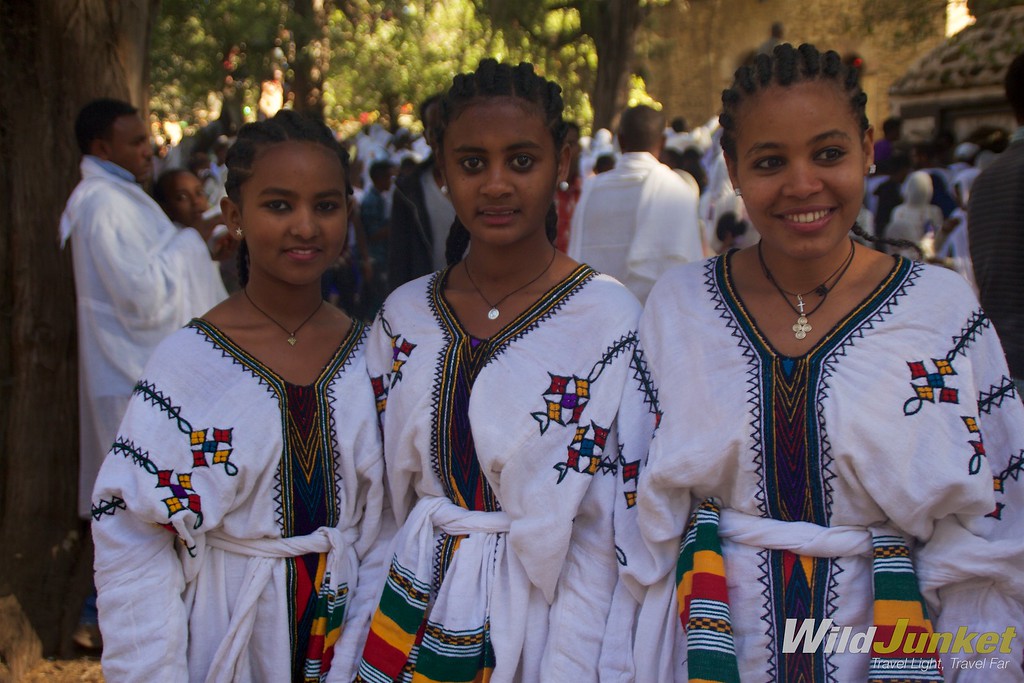
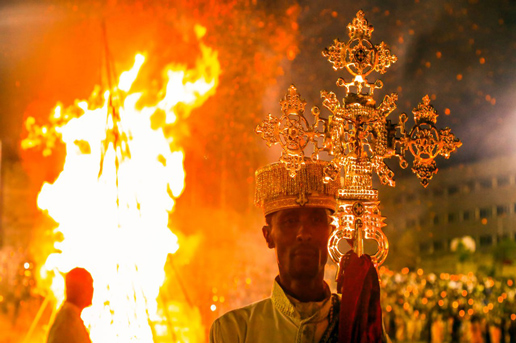
- The Procession: Thousands of priests, deacons, and choir members from local churches march into the square. They wear dazzling, snow-white traditional robes (zurias) and vivid, ceremonial capes, carrying ornate silver crosses and velvet umbrellas.
- The Chants: The air fills with the hypnotic, rhythmic sound of Ge'ez hymns, accompanied by the deep, booming thud of the kebero (traditional drums) and the swaying of thousands of candles.
- The Lighting: As night falls, the Patriarch of the Ethiopian Orthodox Tewahedo Church officially lights the towering Demera. The flames leap stories high into the night sky, met by roaring cheers, ululations, and singing.
Local Insight: Keep an eye on which way the central pole of the bonfire falls as it burns. Elders and onlookers closely watch the direction of the ash and wood, as tradition dictates it predicts the fortune, harvest, and peace of the country for the coming year!
Meskel Day: Blessings, Ashes, and Feasting
The official day of Meskel (September 27) shifts from public spectacle to intimate, spiritual, and family-centered traditions.
In the morning, the faithful return to the site of the previous night's bonfire. They take the black charcoal ashes and gently smear them on their foreheads in the shape of a cross—a physical blessing carried throughout the day.
The rest of the day is a celebration of community and food. After weeks of fasting from animal products leading up to the holiday, families gather to break bread. Kitchens overflow with the rich aroma of Doro Wat (a spicy, slow-cooked chicken stew with hard-boiled eggs), freshly baked Meskel Kita (a thick, festive flatbread), and plenty of Injera. Neighbors freely walk into each other's homes to trade blessings, sip traditional Ethiopian coffee, and drink tella (local barley beer).
Travel Tips for Experiencing Meskel
If you are planning to add Meskel to your travel bucket list, here is how to make the most of it:
- Book Early: Hotels and flights into Addis Ababa fill up months in advance.
- Arrive Early at Meskel Square: If you want a good view or a seat on the stone steps, aim to arrive by 2:00 PM on the day of the Demera, even though the main lighting happens around dusk.
- Dress Vertically White: Wear white if you can! It is a sign of respect and aligns beautifully with the traditional dress worn by the locals.
- Look Beyond the Capital: While Addis Ababa hosts the largest crowd, experiencing Meskel in historical rock-hewn cities like Lalibela, the ancient capital of Gondar, or among the Gurage people (where Meskel is their largest cultural event of the year) offers an entirely different, incredibly intimate magic.
Meskel is more than just a religious holiday; it is a profound testament to Ethiopia's living history, vibrant community spirit, and unmatched hospitality. Standing under the glow of the Demera, surrounded by thousands of singing voices, is an experience that stays with you long after the embers fade.